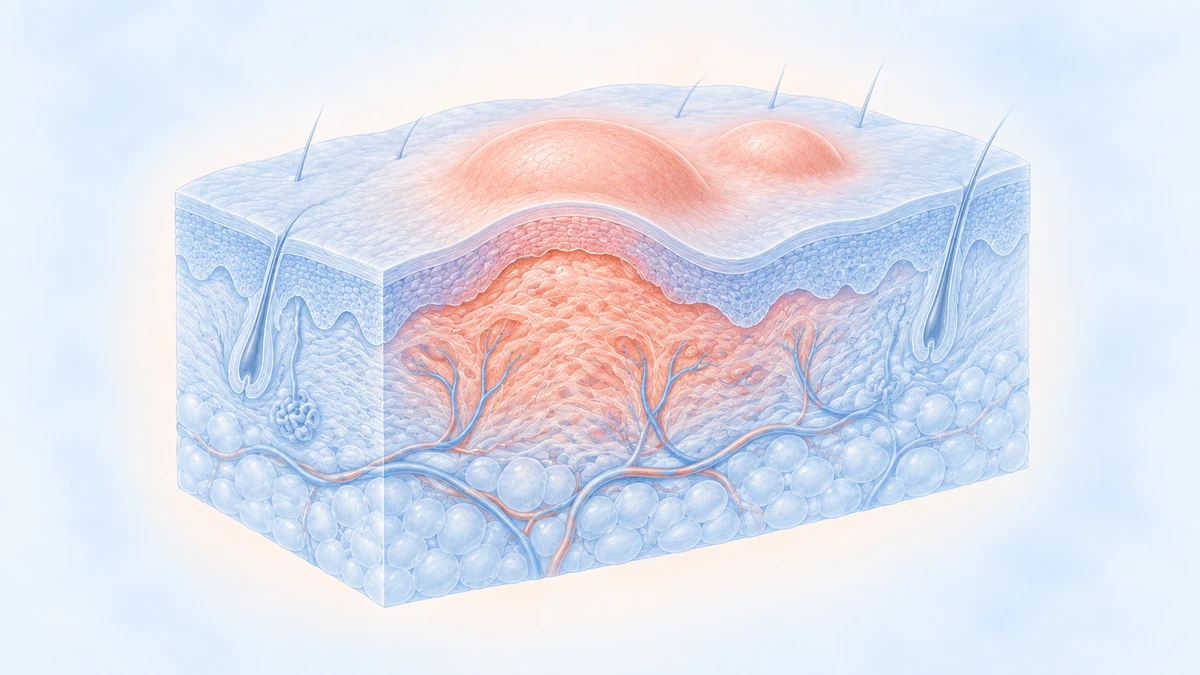
Raised pink welts that itch, appear within minutes and then move somewhere else: at least one person in five will get hives at some point in their life. They are usually harmless. Even so, it is important to spot the rare signs that mean calling for emergency help.
When to call 101: anaphylaxis
Hives are sometimes the visible part of a serious allergic reaction, anaphylaxis. Call 101 (Magen David Adom) without delay if the welts come with any of these signs:
- swelling of the lips, tongue or throat;
- difficulty breathing or swallowing, or wheezing;
- a change in the voice, which sounds hoarse or muffled;
- feeling faint, looking pale, or feeling about to pass out;
- vomiting or tummy pain that comes on shortly after a food, a medicine or an insect sting.
If an adrenaline auto-injector has been prescribed, use it straight away, into the thigh, then call 101 — even if the symptoms improve. Lie down with your legs raised; if you are struggling to breathe, stay sitting up.
What do hives look like?
Hives have a few very typical features:
- raised welts, pink or red, sometimes paler in the centre;
- itching that is often intense and can disturb sleep;
- welts that move around: they fade in one place and reappear somewhere else;
- each welt fades within 24 hours, leaving no mark.
A patch that stays in the same place for more than a day, that burns more than it itches, or that leaves a bruise is NOT ordinary hives: it needs to be examined.
Swelling of the face: angioedema
When the reaction reaches the deeper layers of the skin, it is called angioedema: the eyelids, the lips, sometimes the hands or feet swell up, with a feeling of tightness rather than itching. It often lasts longer than ordinary welts, up to two or three days.
Swelling of the face always calls for medical advice, even without any difficulty breathing. If it spreads to the tongue or throat, call 101. Some blood pressure medicines can cause swelling without any welts: this type responds poorly to antihistamines and should be reported to your doctor.
What causes hives?
Hives are not always an allergy. The most common triggers are:
- a viral infection, by far the leading cause in children;
- a medicine: an antibiotic, an anti-inflammatory, aspirin;
- a food: peanuts, tree nuts, egg, milk, fish, shellfish;
- an insect sting;
- physical causes: cold, rubbing or pressure from clothing, heat, exercise;
- stress, which can keep flare-ups going or make them worse.
In children, the antibiotic given for a fever is often wrongly blamed: quite often it is the virus itself that brings out the hives. It is worth checking this before labelling a child as allergic. In many cases no cause is found, and that is not a sign that anything is seriously wrong.
Acute or chronic hives?
Hives are called acute when an episode lasts less than six weeks. This is the most common form: it usually clears within a few days, without any tests.
Beyond six weeks, with flare-ups almost every day, it is called chronic hives. It is rarely caused by an allergy. A few simple tests, guided by a careful history, are then useful to rule out another condition. Allergy testing is not routine: it is considered when a specific trigger is suspected.
Treating hives
Treatment is based on an antihistamine, taken on medical advice. The doctor chooses the medicine and how long to take it according to age and how severe the flare-ups are. A few simple measures also help:
- avoid the trigger when it is known;
- wear loose clothing, preferably cotton;
- keep cool: a lukewarm shower, a well-aired room;
- avoid aspirin and anti-inflammatories, which can make flare-ups worse, unless your doctor advises otherwise.
Steroids are not routine. They are sometimes prescribed for a short course when symptoms are severe, but they do not replace the antihistamine. For babies, pregnant women and older people, treatment is decided with a doctor.
When to see a doctor about hives
Apart from the signs that mean calling 101, see a doctor promptly in these situations:
- a first episode of hives, especially if it is widespread;
- swelling of the face, even without any difficulty breathing;
- a fever at the same time, particularly in a child;
- joint pain;
- welts that stay in the same place for more than 24 hours or leave bruises;
- hives that last longer than a few days or keep coming back.
Hives and video consultation
Hives lend themselves very well to a remote consultation: the rash shows up well on screen and is easy to photograph, even if it has faded by the time of the call. Careful questioning does most of the work — foods, medicines, a recent infection, an insect sting, the circumstances — to look for the cause, rule out warning signs and prescribe treatment straight away. Welts that stay put, bruising, a fever or joint pain, on the other hand, call for an examination during a home visit.
Difficulty breathing or swallowing, or swelling of the throat, can never be assessed by video: call 101.
Seeing Dr Nathalie Gozlan
Dr Nathalie Gozlan, a general practitioner and a specialist in emergency medicine, sees adults and children with hives: looking for the cause, checking for warning signs and prescribing treatment — as a home visit in the Sharon region (Netanya, Kfar Saba, Raanana, Kadima-Tzoran, as well as the moshavim and kibbutzim of the area), or by video consultation anywhere in Israel, in English, Hebrew and French.
Swelling of the tongue or throat, difficulty breathing or feeling faint after a sting or a food: call 101.
Frequently asked questions
Are hives contagious?
No, hives themselves cannot be passed on. However, the virus that triggered them in a child can spread within the family or at daycare. A child with hives and no fever can usually carry on with their normal activities.
How long do hives last?
Each welt fades within 24 hours, but new ones can keep appearing for several days. Acute hives usually clear within a few days to a few weeks. Beyond six weeks, the condition is called chronic hives and deserves further assessment.
Do I need allergy tests after an episode of hives?
Not routinely: most cases are not caused by an allergy. Testing is considered when a food, a medicine or an insect sting is strongly suspected, or after a serious reaction. Your doctor will refer you to an allergist if needed.
Can hives be treated by video consultation?
Yes, in the vast majority of cases: the rash shows up well on video or in a photo, and careful questioning makes it possible to look for the cause and prescribe treatment. If welts stay in one place, leave bruises or come with a fever, a home visit is offered. For any difficulty breathing or swelling of the throat, call 101.