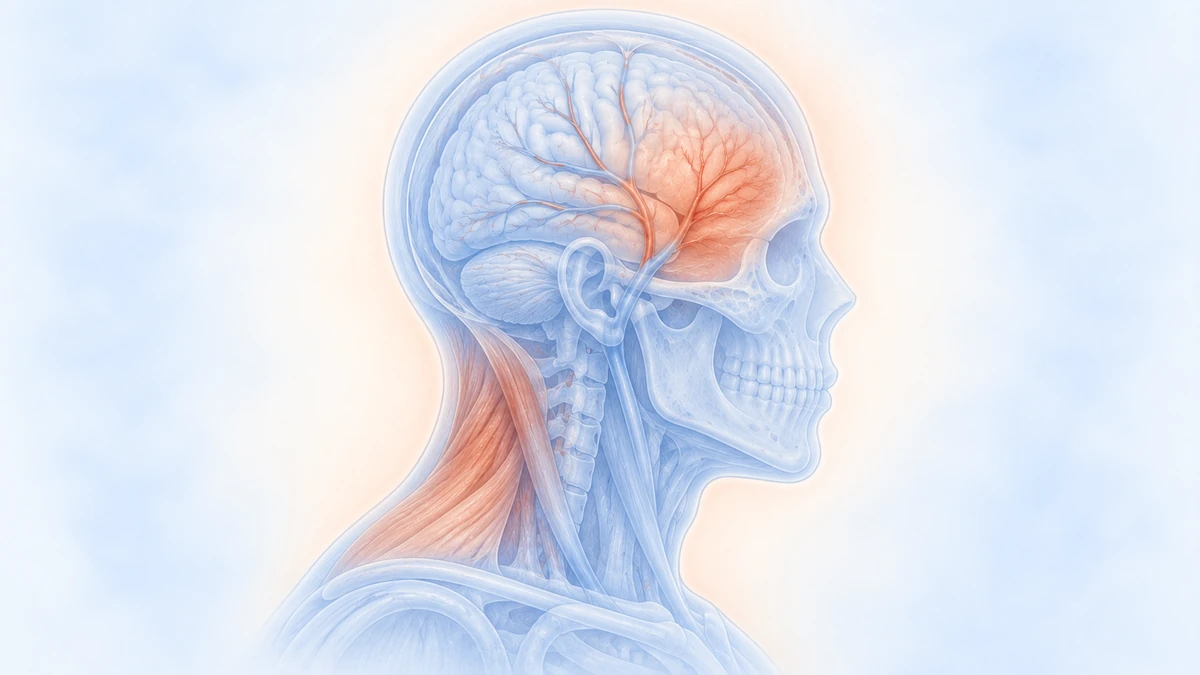
A headache is one of the most common symptoms there is. In the vast majority of cases it is harmless: tension, tiredness, migraine. A few signs, on the other hand, call for immediate action — and it is important to know how to recognise them.
Headache: when to call 101 immediately
Call 101 (Magen David Adom) straight away if a headache comes with any of these signs:
- a sudden headache that reaches its peak within seconds, a “thunderclap” — the worst of your life;
- a headache with fever and a stiff neck, or with red or purple spots on the skin that do not fade when pressed;
- a headache with paralysis or weakness on one side of the body, difficulty speaking, loss of vision or confusion;
- a headache after a blow to the head, especially if it gets worse or comes with vomiting or drowsiness;
- a seizure.
These signs can point to bleeding in the brain, meningitis or a stroke. In these situations, every minute counts.
The most common types of headache
The great majority of headaches are not linked to any serious illness. The most common are:
- tension headache: a pressing, band-like pain on both sides of the head, moderate, that does not stop you carrying on with your day; stress, tiredness and poor posture make it more likely;
- migraine, which comes back in attacks (see below);
- medication overuse headache, when painkillers taken too often end up keeping the pain going;
- sinusitis: pain in the forehead or cheeks that gets worse when you lean forward, often after a cold;
- lack of sleep, dehydration, a skipped meal, the heat;
- long hours in front of a screen without a break.
How to recognise a migraine
Migraine comes in attacks lasting from a few hours to three days. Between attacks, you feel fine. It has several typical features:
- pain often on one side of the head, sometimes switching sides from one attack to the next;
- throbbing pain that beats in time with the heart;
- pain that gets worse with exertion, even climbing the stairs;
- nausea, sometimes vomiting;
- sensitivity to light and noise, which makes you want to shut yourself away in the dark.
Some people have an aura before the pain: flashing zigzag lines, a blind spot, sometimes pins and needles in a hand or the face, which build up gradually and last less than an hour. A first aura, especially after the age of 40, needs to be assessed without delay: it can look like a stroke.
When to see a doctor promptly
If none of the emergency signs are present, see a doctor promptly if:
- the headaches are new and started after the age of 50;
- they change in character: stronger, more frequent, different from usual;
- they wake you at night or are at their worst when you wake up;
- they get worse week after week;
- you are pregnant or have just given birth: see a doctor the same day, and go to the maternity emergency department if your vision blurs or your face and hands swell;
- you take an anticoagulant (blood thinner): see a doctor the same day;
- you have or have had cancer, or have a weakened immune system.
Relieving a headache or migraine attack
A painkiller such as paracetamol (acetaminophen), or an anti-inflammatory such as ibuprofen, works best when taken early, as soon as the pain starts. During pregnancy, take no anti-inflammatories without medical advice: they must not be used from the sixth month onwards.
Resting somewhere quiet and dark, a little water and sometimes a short sleep help a great deal. When these measures are not enough, there are specific migraine treatments, on prescription: the doctor chooses them according to your attacks and your health.
Beware of painkiller overuse
This is a common trap. Taken on more than two or three days a week, for months, painkillers keep the pain going instead of relieving it. The headaches become almost daily.
The way out is to stop the painkillers with a doctor's support, often together with a preventive treatment. The first days are hard, but the headaches then usually ease considerably.
Preventive treatment and a headache diary
When attacks are frequent or very disabling, a preventive treatment, taken every day, reduces how often they happen and how severe they are. It is decided together with the doctor.
A headache diary is very useful: date, duration, intensity, medicines taken, circumstances (sleep, meals, periods, stress). It helps identify triggers and judge how well the treatment is working. Migraine with aura should also be mentioned to any doctor prescribing contraception.
Headaches and video consultation
Migraine lends itself well to a remote consultation: the diagnosis rests above all on careful questioning — the type of pain, how long it lasts, the accompanying signs, the medicines taken. A video consultation makes it possible to recognise a migraine or a tension headache, to spot painkiller overuse and to adjust the treatment. An unusual headache, or one that is getting worse or comes with other signs, needs an examination instead: a home visit is then offered.
Any warning sign — sudden pain, fever with a stiff neck, paralysis, confusion — cannot be assessed remotely: call 101.
Seeing Dr Nathalie Gozlan
Dr Nathalie Gozlan, a general practitioner and a specialist in emergency medicine, sees patients with headaches or migraine — checking for warning signs, treating attacks and providing follow-up — as a home visit in the Sharon region (Netanya, Kfar Saba, Raanana, Kadima-Tzoran, as well as the moshavim and kibbutzim of the area), or by video consultation anywhere in Israel, in English, Hebrew and French.
A sudden headache that is the worst of your life, or one with fever and a stiff neck, cannot be assessed remotely: call 101.
Frequently asked questions
How can I tell if it is a migraine?
Migraine comes back in attacks lasting from a few hours to three days. The pain is often on one side, throbbing and made worse by exertion, with nausea and sensitivity to light. Between attacks, you feel fine. The diagnosis is confirmed with a doctor, especially during the first attacks.
When should I worry about a headache?
A sudden, intense headache, the worst of your life, or one that comes with fever, a stiff neck, paralysis, difficulty speaking or confusion means calling 101. New headaches after the age of 50, or ones that wake you at night or get worse week after week deserve a prompt consultation.
Can I take a painkiller every day?
No, not for long periods. Taken on more than two or three days a week, for months, painkillers keep headaches going. If you need them often, talk to a doctor: a preventive treatment may be appropriate.
Can a migraine be treated by video consultation?
Yes, in most cases: the diagnosis of migraine rests on careful questioning, and a video consultation makes it possible to adjust the treatment of attacks or start a preventive treatment. An unusual headache, or one that is getting worse, needs an examination. If there is a warning sign, call 101.